
2027 Marketing Planning: How to Prepare Your Company for Growth
A practical guide to transforming growth goals into demand, budget, channels, and KPIs.

The 2027 marketing plan is the process of transforming a company's growth objectives into goals, strategies, channels, investments, indicators, and responsibilities for the coming year.
More than just creating a campaign calendar, marketing planning means defining how the company intends to generate demand, strengthen its authority, support the sales team, and turn investment into real business opportunities.
For medium and large companies, this planning must consider longer sales cycles, different decision-making audiences, service capacity, cross-team integration, and data quality. Bull Digital works precisely at the intersection of strategy, marketing, technology, and data to transform business objectives into measurable actions.
What is a strategic marketing plan?

Strategic marketing planning is the document that organizes the decisions that will guide the department's actions during a specific period.
A 2027 marketing plan must answer essential questions:
Which business objectives does marketing need to support?
Which audiences does the company want to reach?
What volume of demand needs to be generated?
Which channels will be used?
How much will be invested?
Which indicators will be monitored?
Who will be responsible for each initiative?
Efficient planning starts with corporate objectives. If the company intends to increase revenue, launch products, enter new markets, or conquer a specific segment, marketing must translate these ambitions into concrete goals and actions.
Why start 2027 marketing planning now?
Starting the planning process in advance allows for data analysis, identifying bottlenecks, and making higher-quality decisions.
Before distributing the 2027 marketing budget, the company needs to understand which channels yielded the best results, where there are losses in the funnel, and what changes will be necessary to sustain expected growth.
This process also helps organize vendors, teams, technology, content production, seasonal campaigns, and potential hires.
Planning ahead does not mean creating a rigid strategy. The goal is to establish a direction so that the company can adapt execution without losing sight of its priorities.
How to create a marketing plan for 2027?
Building a marketing plan for companies can be organized into ten steps.
1. Define the business objective
Start with the result the company wants to achieve in 2027. The objective may involve revenue increase, regional expansion, customer portfolio growth, launching a solution, or brand strengthening.
Avoid generic definitions like "sell more" or "increase digital presence." Determine the expected result, the deadline, and the method of tracking.
2. Determine the role of marketing
Marketing can act in demand generation, authority building, customer retention, account expansion, or supporting the sales process.
Defining priorities prevents the department from trying to respond to all organizational needs at once. Marketing's role must be connected to the corporate strategy.
3. Perform reverse demand calculation
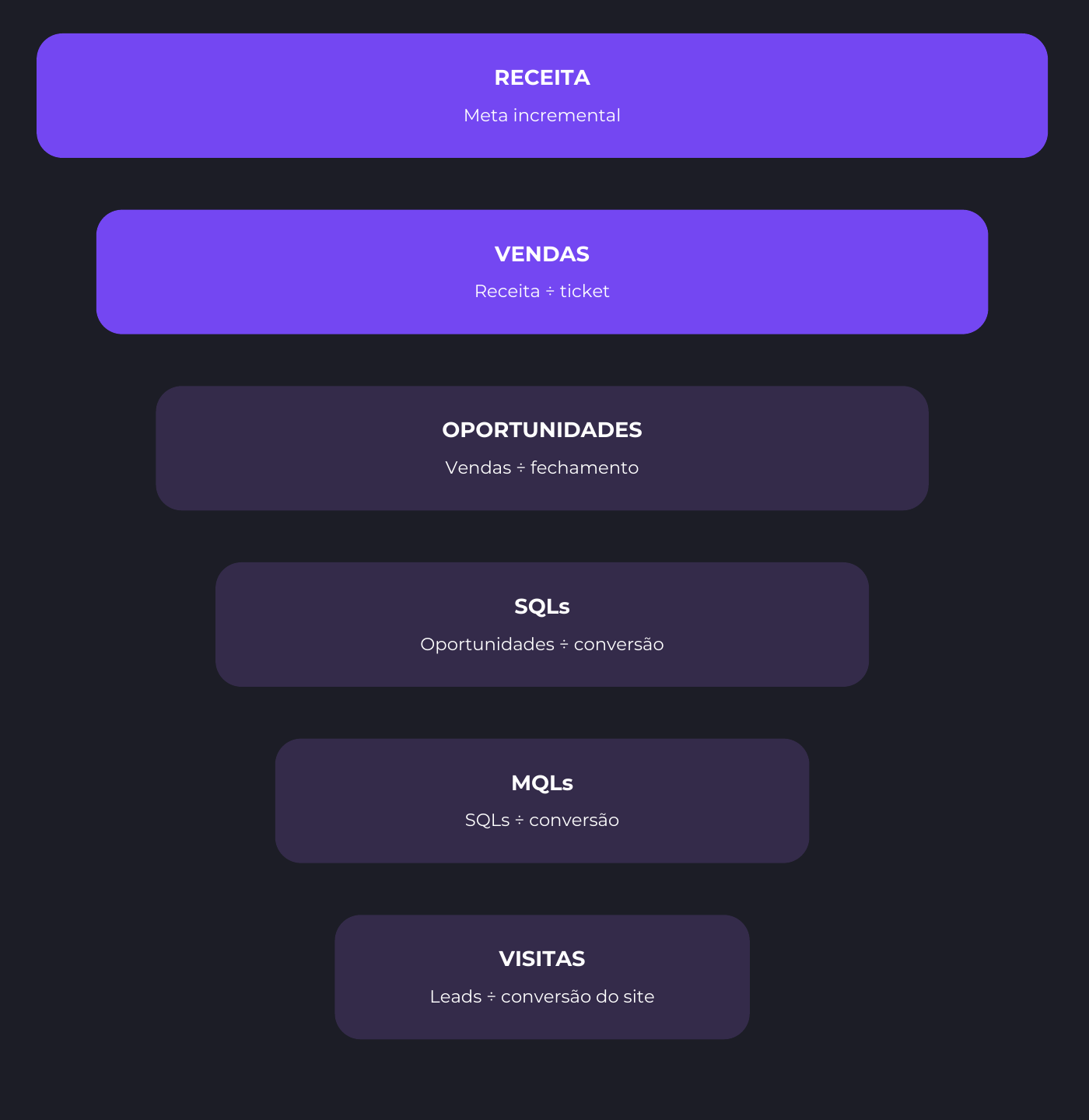
To calculate the required demand, start with the revenue goal.
Based on the average ticket size, estimate how many new contracts need to be closed. Then, use funnel conversion rates to calculate how many opportunities and qualified leads will be required.
This reverse calculation helps connect the sales goal to the marketing investment.
4. Evaluate the sales team's capacity
It is not enough to generate more leads if the sales team does not have the capacity to handle them.
Analyze the number of sales reps, average response time, sales cycle duration, and the number of opportunities each professional can manage. Marketing and sales need to grow in a coordinated manner.
5. Know the audience and the buying committee
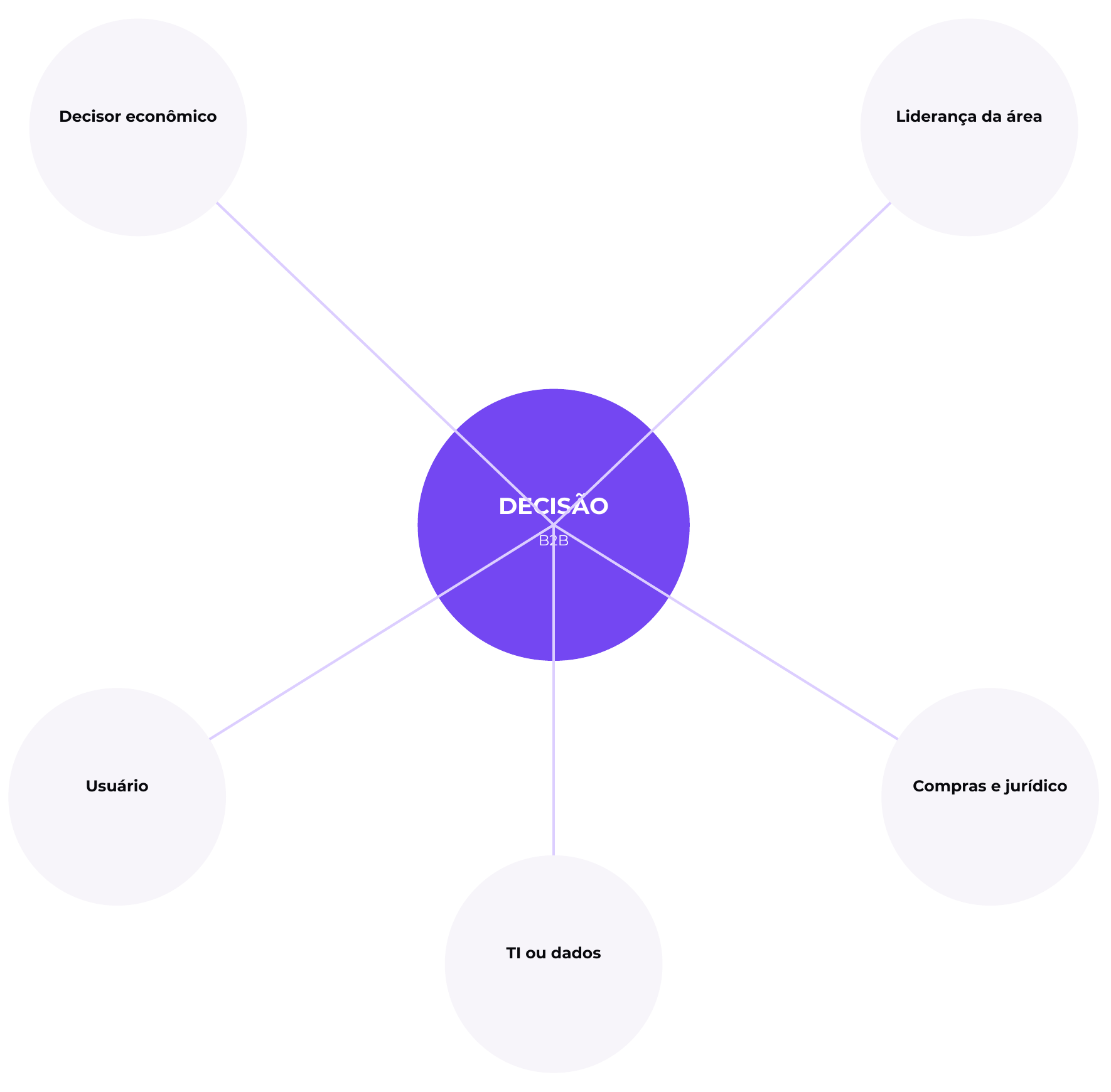
In B2B markets, a negotiation usually involves different participants. Users, managers, directors, buyers, and technical professionals can influence the decision.
Map out the needs, objections, and selection criteria for each profile. This knowledge allows for the creation of content, campaigns, and approaches suitable for each stage of the journey.
6. Choose channels by function
Each channel must fulfill a role within the strategy.
Paid media can accelerate demand generation. SEO expands organic presence in search engines. GEO helps structure content for generative engines and artificial intelligence tools. Content and social media strengthen authority. CRM and inbound marketing organize relationship building, nurturing, and qualification.
An integrated marketing strategy connects these channels to the same objectives, avoiding isolated actions and internal budget competition.
7. Define the 2027 marketing budget
The budget should consider the growth goal, operational history, sales cycle, acquisition cost, and execution capacity.
Organize the investment into categories, such as:
Media and distribution;
Content and creative;
Technology and automation;
Events and public relations;
Specialized vendors;
Internal team;
Testing and innovation.
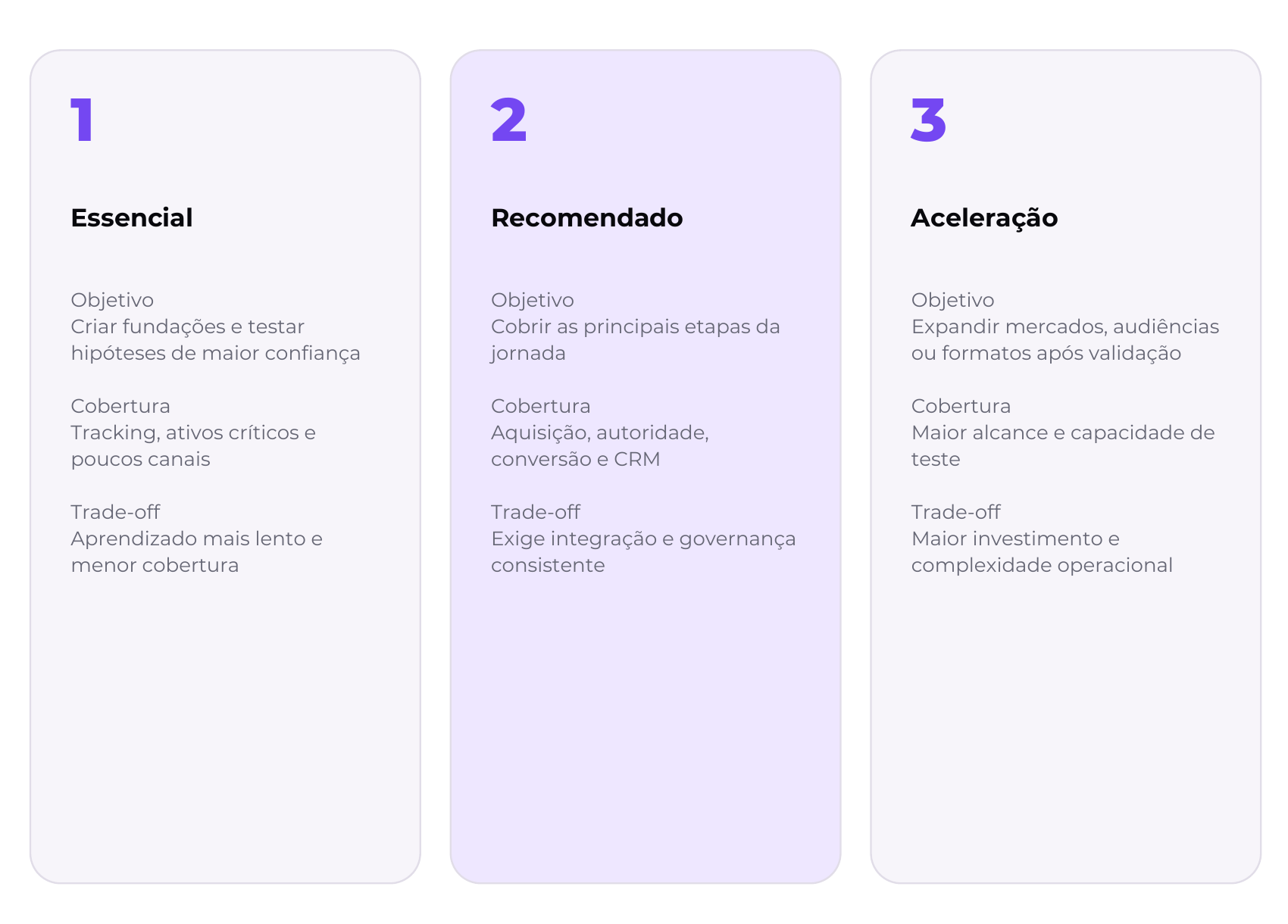
It is also recommended to create investment scenarios. An essential scenario covers minimum actions; the recommended one sustains primary goals; and the acceleration scenario considers additional investments to scale demand.
8. Structure the marketing calendar
The annual calendar should bring together brand campaigns, launches, events, seasonal periods, and sales actions.
This integrated view allows for the anticipation of content, media, design, and technology demands. It also prevents too many initiatives from being concentrated in the same period.
9. Create an action plan for the first 90 days
Transform the annual strategy into short-term deliverables.
The 90-day plan should present priorities, responsible parties, deadlines, and indicators. This step creates execution momentum and allows for quick identification of which actions need adjustment.
10. Establish indicators and governance
Define who will track results, what data will be used, and how frequently analyses will be performed.
Without governance, the planning runs the risk of becoming just a document. Periodic meetings help compare results, review priorities, and make data-driven decisions.
Which channels to include in the 2027 marketing plan?
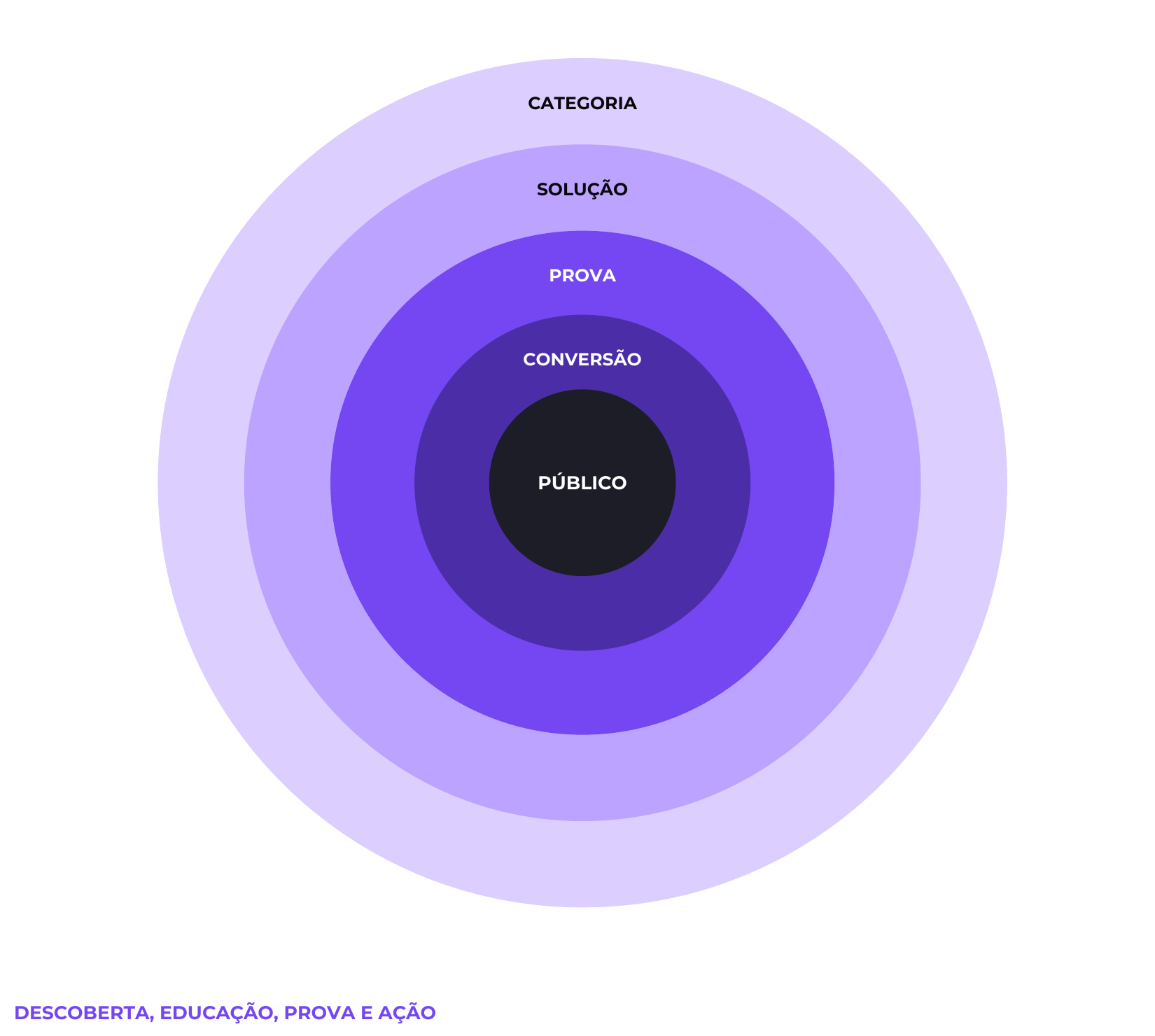
The choice of channels should consider audience behavior, the company's objective, and each front's contribution to the business.
Top channels and strategies include:
Paid media: acquisition, reach, and demand generation;
SEO: organic presence in search engines;
GEO: presence in responses generated by artificial intelligence tools;
Content marketing: market education and authority building;
Social media: relationship, distribution, and positioning;
Inbound marketing: lead nurturing and qualification;
CRM: data organization and journey tracking;
Public relations: reputation and institutional presence;
Technology: integration, automation, and operational efficiency;
Data: measurement and decision support.
Medium and large companies typically need to combine different fronts. The plan should function as an integrated system, where each channel has a function and contributes to business goals.
ChatGPT Ads and ChatGPT Ads Brazil in 2027 planning
The advancement of artificial intelligence also requires companies to track new environments for discovery, recommendation, and advertising.
Therefore, topics like ChatGPT Ads and ChatGPT Ads Brazil may enter the 2027 marketing planning as monitoring and innovation fronts. Before allocating budget, however, it will be necessary to evaluate the official availability of formats, targeting capabilities, platform policies, and measurement possibilities.
The most important thing is not to treat a new platform as an isolated action. If advertising formats associated with ChatGPT become available and are suitable for the Brazilian market, they should be part of an integrated strategy, connected to positioning, demand generation, and the sales funnel.
Beyond advertising, companies also need to produce clear, reliable, and well-structured content to increase their chances of being found in search engines and cited by artificial intelligence tools.
How to integrate marketing and sales?
The integration between marketing and sales starts with shared definitions.
Both areas need to agree on what characterizes a qualified lead, when an opportunity should be forwarded to sales, and what information needs to be recorded in the CRM.
It is also important to establish a service response time. A lead generated by marketing can lose value when it takes too long to receive a follow-up.
Periodic meetings should analyze contact quality, reasons for loss, sales objections, and the content needed to support negotiations.
With a Growth Intelligence structure, the company can track the complete journey, identify bottlenecks, and analyze marketing's contribution to the sales pipeline.
Which indicators to track in 2027?
KPIs should be organized across different levels.
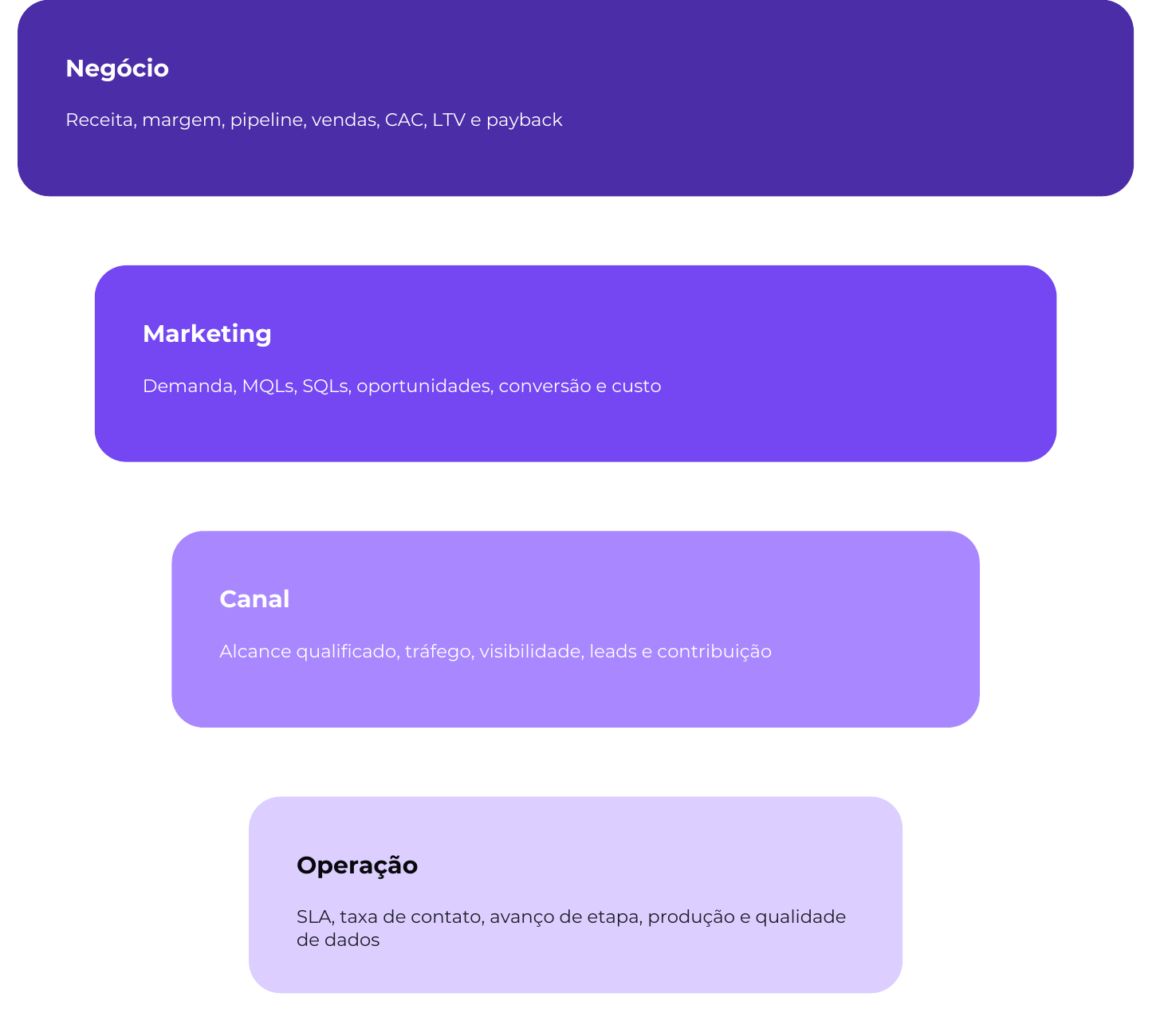
Business indicators
Revenue, pipeline, new customers, average ticket, sales cycle, and return on investment.
Marketing indicators
Qualified leads, generated opportunities, acquisition cost, conversion, and pipeline contribution.
Channel indicators
Organic traffic, reach, engagement, cost per lead, landing page conversion, and campaign performance.
Operational indicators
Calendar compliance, production speed, data quality, and lead response time.
The goal is not to track the largest possible number of metrics, but to select indicators that help in making decisions.
Download the 2027 Marketing Plan
To help your company transform strategy into execution, Bull Digital has prepared a free 52-page guide.
The plan includes diagnostics, goal setting, reverse demand calculation, budgeting, channel selection, annual calendar, 90-day plan, indicators, governance, and an implementation checklist.
Download the 2027 Marketing Plan for free
Use this material to lead discussions with your team, organize priorities, and build a plan connected to real business objectives.
If your company needs support transforming this planning into integrated actions for marketing, technology, data, and demand generation, learn about Bull Digital's solutions.
Frequently asked questions about 2027 marketing planning
When should I start 2027 marketing planning?
Ideally, start before the end of 2026, allowing time to analyze results, define priorities, approve investments, and organize execution.
How do I create marketing goals for 2027?
Start with business objectives and translate them into goals for demand, pipeline, opportunities, acquisition, retention, or brand authority.
How do I calculate the demand needed to reach the sales goal?
Divide the revenue goal by the average ticket size to estimate the number of sales. Then, use funnel conversion rates to calculate how many opportunities and leads will be necessary.
How do I choose marketing channels?
Consider where the audience searches for information, the function of each channel, the sales cycle, available resources, and performance history.
Which KPIs should be part of the plan?
Prioritize indicators related to revenue, pipeline, opportunities, acquisition, conversion, channel efficiency, and operational quality.
Can the plan change during the year?
Yes. The plan defines a direction, but it should be reviewed periodically based on results, market changes, and company needs.