
Brand Storytelling: How to Structure Communication that Converts
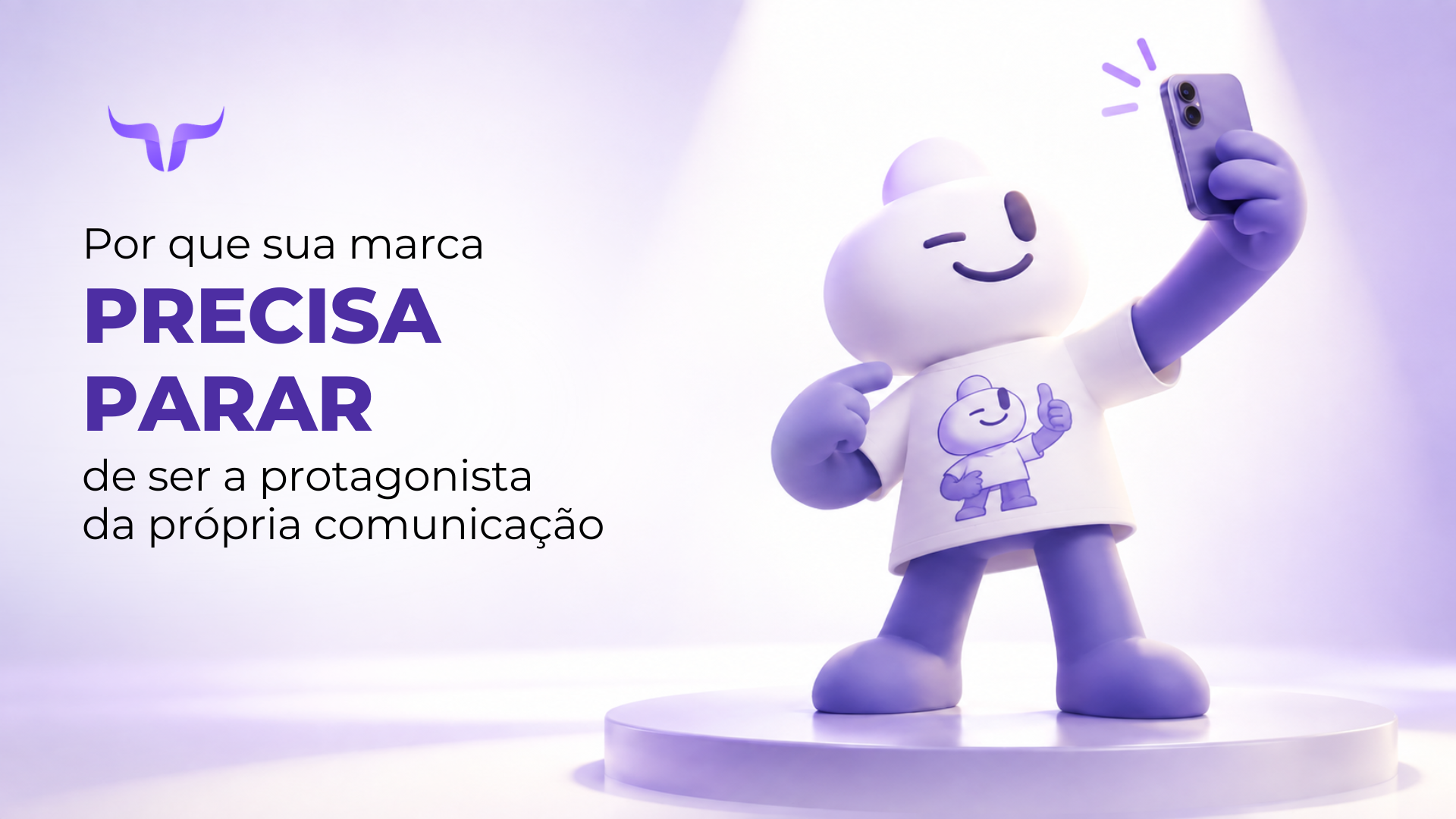
Why your brand needs to stop being the protagonist of its own communication
By Letícia Hudson

I work every day with content strategy and brand positioning, and there is one crucial mistake I see repeated in almost every company before they reach me: the brand insists on being the hero of its own story.
It makes sense in theory. But only in theory. The company has invested time, money, and energy into building a product or service, so it is natural to want to talk about it, its history, and its differentiators. The problem is that the person on the other side of the screen (the customer) isn't looking for a company to admire. They are
looking for someone to solve their problem.
It is this small adjustment in perspective that changes your entire communication. And that’s no exaggeration.
The structure behind every good story (and every good brand)
Years ago, a Hollywood screenwriter decided to study why some stories capture the audience's attention from the very beginning of the movie until the credits roll, while others, even when well-produced, simply fail to connect. He noticed a pattern: every narrative that works follows a structure similar to what you have seen hundreds of times at the movies, even if you don't realize it.
There is a main character. This character wants something but faces an obstacle. Along the way, a guide appears—always someone with more experience who has been there before and knows the ropes. This guide provides a super simple plan (even if full of challenges, like defeating a villain), calls the main character to action, and shows what is at stake if they fail to act.
I didn't invent this framework, and it isn't mine. It is a consolidated storytelling methodology applied to business that several brands around the world already use to communicate with more clarity. What I do is apply this logic in practice, every day, with the clients I serve.
And here is the secret: the brand is never the main character. The customer is.
The brand is ALWAYS the guide. The one who has solved the problem hundreds of times, who understands the pain of the person on the other side, and who appears at exactly the right time with a clear plan.
How I apply this in practice
When I start structuring a brand's communication, the first question I ask is never "what do you do?". It's "who is your customer, and what do they want to achieve?".
From there, the work follows a script:
1. I identify what the customer really wants. Most of the time, it's not the product itself, but the transformation or solution they seek. A property security company doesn't sell cameras; it sells peace of mind. A marketing agency doesn't sell posts; it sells growth.
2. I map out the problems standing in the way. This involves three layers: the practical problem (what stalls their daily routine), the emotional problem (the frustration it generates), and the deeper, philosophical problem that explains why solving it matters.
3. I position the brand as the guide (never the hero, remember?). This means showing authority and empathy without taking away the protagonist role from the customer.
4. I build a simple plan. No one acts when faced with something complicated. Three clear steps are worth more than a ten-paragraph institutional speech.
5. I create a direct call to action. Without fluff or beating around the bush—no generic "learn more."
6. I make it clear what is at stake. What the customer gains by acting, and what they lose by not acting.
This script becomes the foundation for everything: website, social media, campaigns, institutional content, and sales presentations. The message stops being scattered and starts telling the same story, every time. Of course, it needs to be slightly adapted to make sense for each channel.
The results this structural shift brings
When a brand stops talking about itself and starts talking about the customer, a few things happen almost immediately:
Communication becomes waaaay clearer. The human brain burns energy trying to understand confusing messages and gives up quickly when that happens. A clear narrative structure reduces this effort.
Engagement increases. People connect with stories where they recognize themselves, not with institutional speeches about the company.
Conversion improves. A simple plan and a direct call to action let the customer know exactly what the next step is, removing friction from the decision journey.
The brand gains consistency. All content begins to reinforce the same positioning instead of appearing fragmented across channels.
It’s not about reinventing the company. It’s about reorganizing how it communicates, placing the customer exactly where they should have been all along: at the center of the story.
Why this matters even more now
You have already noticed that the way people search for information is changing, and today AI assistants are 100% focused on the person asking. Brands that know how to tell their own story clearly come out ahead. Not just for the consumer, but also for the mechanisms brokering this conversation.
Confusing communication doesn't convert customers, and it isn't well-interpreted by AI-based search engines. And rest assured: clarity is a very real competitive advantage, even if it seems simple at first.
That is why, whenever I take over a brand's communication, the first question remains the same: who is the hero of this story?
It's never the company. It's always the person on the other side, waiting for a guide who knows the way.
Conclusion
Putting the customer at the center of the story isn't a copywriting trick: it's a strategic decision. When the brand takes on the role of the guide, communication gains clarity, engagement rises, and the customer understands what the next step is. The same applies to AI search tools, which better interpret organized and consistent messages.
In the end, it all comes back to the question that guides this work: who is the hero of this story? The answer is never the company. It is always the person on the other side, waiting for a guide who knows the way.
FAQ: Quick questions and answers
What is brand storytelling?
It is the way of communicating what a brand does through a clear narrative, where the customer has a desire, faces a problem, and finds a solution. Instead of talking only about the company, communication shows the transformation it delivers.
Why should the customer be the hero, and not the brand?
Because the customer isn't looking for a company to admire; they are looking for someone to solve their problem. When the message starts from the customer's needs, they recognize themselves in the story and understand faster why they should act.
What is the brand's role in this story?
The guide. The brand shows empathy and authority, presents a simple plan, and helps the customer get where they want to go without stealing their spotlight.
What are the elements of a good narrative structure for brands?
A customer with a clear desire, a problem (practical, emotional, and philosophical), a brand acting as a guide, a simple plan, a direct call to action, and clarity about what is at stake by acting or not acting.
Does brand storytelling really improve conversion?
Yes, because it removes friction. When the customer sees a simple plan and a direct call to action, they know what the next step is and decide more easily.Does clear communication also help with AI searches?
Yes. AI assistants and search engines better interpret organized and consistent content. Confusing communication converts less and is poorly understood by these tools.Do I need to reinvent my company to apply this?
No. What changes is the way the company communicates: the product and service remain the same, but the message begins to revolve around the customer.
How Bull Digital can help
Bull Digital is a growth intelligence company that combines strategy, intelligence, and execution to transform marketing into real, measurable growth. The starting point is always the same as in this article: understanding who your brand's customer is and what they want to achieve.
Based on this, we structure your positioning and carry the same narrative across all channels: website, social media, video, radio, Google Ads, and sales materials. The message stops being scattered, and communication starts telling a single, clear, result-oriented story.
If your brand still talks more about itself than the customer, talk to Bull Digital and discover how to put the right hero at the center of your communication.